
Introduction
Understanding how to calculate depreciation on a rental property ? is one of the smartest moves you can make as a real estate investor. Depreciation lets you recover the cost of your rental property over time — legally reducing your taxable income every single year.
Whether you’re a beginner or an experienced investor, calculating depreciation correctly can mean the difference between overpaying taxes or unlocking thousands of dollars in annual tax savings.
This guide breaks down:
- How the IRS depreciation formula works
- Step-by-step calculation examples
- Common mistakes investors make
- How to use tools like a rental property depreciation calculator
- The tax benefits of rental property depreciation
- How depreciation affects financing, such as applying for a commercial property loan
- Maintenance, improvements, and how they impact depreciation
Let’s dive in.
How Do You Figure Depreciation on Rental Property?
Depreciation is calculated using IRS rules under the Modified Accelerated Cost Recovery System (MACRS) — the standard method for residential real estate.
Under MACRS, residential rental property depreciates over 27.5 years, while commercial property depreciates over 39 years.
The Basic Formula for Depreciation
The standard depreciation formula is:
Annual Depreciation = (Cost of Property – Land Value) / Useful Life
- Useful life:
- 27.5 years for residential rentals
- 39 years for commercial buildings
- Land cannot be depreciated
Step-by-Step: How to Calculate Depreciation Correctly
Step 1: Determine Your Property’s Cost Basis
Cost basis includes:
| Included in Cost Basis | Not Included |
|---|---|
| Purchase price (building portion) | Land value |
| Legal fees | Landscaping |
| Recording fees | Fencing added after purchase |
| Title insurance | Furniture (depreciated separately) |
| Sales tax | Appliances not included in purchase |
Step 2: Verify It’s Residential or Commercial
- Residential rental: 27.5 years
- Commercial: 39 years
If financing through a commercial property loan, depreciation rules vary slightly based on building classification.
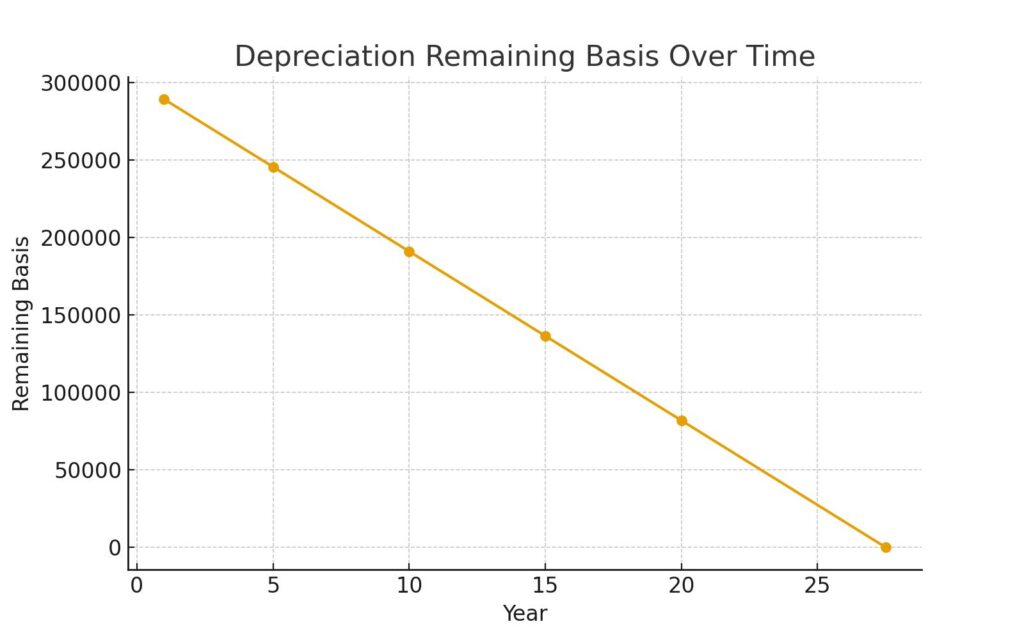
Chart: Depreciation Breakdown Over 27.5 Years
Below is a Markdown-based bar chart approximation showing the declining remaining basis:
🧾 Common Items You Can Also Depreciate Separately
1. Appliances (5-year life)
- Fridge
- Stove
- Dishwasher
2. Capital Improvements
These increase property value and must be depreciated:
| Improvement | Recovery Period |
|---|---|
| Roof replacement | 27.5 yrs |
| Flooring | 5–9 yrs |
| HVAC | 27.5 yrs |
| Driveway | 15 yrs |
Common IRS Mistakes to Avoid
“I depreciated the full purchase price.”
❌ Incorrect because land cannot be depreciated
“I started depreciation the year I purchased it.”
❌ IRS only allows depreciation when the property is placed in service.
“I skipped a year can I resume?”
❌ Missing years require a special IRS form to correct.
Use a Rental Property Depreciation Calculator
For investors who want automation, using a depreciation calculator saves hours of manual work.
These calculators typically handle:
- MACRS schedules
- Mid-month conventions
- Partial-year depreciation
- Improvements
- Bonus depreciation (when applicable)
Tax Benefits of Rental Property Depreciation
Depreciation is powerful because it reduces taxable rental income even when your real profit is higher.
Key Benefits
- Lowers taxable income
- Offsets rental earnings
- Improves cash flow
- Allows strategic timing of improvements
- Reduces capital gains via cost segregation
- Helps qualify for financing (especially a commercial property loan)
Example: Before & After Depreciation
Without Depreciation
| Description | Amount |
|---|---|
| Rental income | $30,000 |
| Expenses | $12,000 |
| Taxable income | $18,000 |
With Depreciation
| Description | Amount |
|---|---|
| Rental income | $30,000 |
| Expenses | $12,000 |
| Depreciation | $10,909 |
| Taxable income | $7,091 |
✔ You save taxes on $10,909 of income without spending any real money.
🛠 How Property Maintenance Affects Depreciation
Link internal anchor: property maintenance
Maintenance (Not Depreciated):
These are deducted in the year paid:
- Plumbing fixes
- Painting
- Pest control
- Minor roof patching
Improvements (Depreciated):
Anything that enhances value or extends property life:
- Full roof replacement
- New flooring
- Adding rooms
- Major HVAC upgrade
Bonus Topic: Depreciation & Commercial Properties
If you’re investing in:
- Multifamily complexes
- Office buildings
- Retail shops
- Warehouses
Then you’ll likely rely on a commercial property loan.
Commercial depreciation uses a 39-year schedule, not 27.5.
Frequently Asked Questions
1. How does the IRS determine land value?
Typically from:
- Appraisal
- Property tax assessment
- Purchase agreement breakdown
2. Can you depreciate land?
No, only the building and improvements.
3. What happens when you sell?
You must recapture depreciation, taxed up to 25%.
4. What if I forgot to depreciate in previous years?
You must file IRS Form 3115 to catch up.
5. Can short-term rental property be depreciated?
Yes if classified as residential property.
Conclusion
Understanding how to figure depreciation on rental property is essential for maximizing your real estate profits. Proper depreciation:
- Reduces taxable income
- Increases cash flow
- Helps you plan improvements strategically
- Strengthens your financial profile for loans
- Protects you during IRS audits
Whether you calculate manually or use a rental property depreciation calculator, mastering depreciation is a must for any real estate investor.